
Roger Miller’s catalog of hits includes “King of the Road,” “Dang Me,” “Chug-a-Lug,” “England Swings,” “Engine, Engine #9,” “Husbands and Wives,” “Billy Bayou,” “Home,” “Invitation to the Blues,” “When Two Worlds Collide,” “Walkin’ in the Sunshine,” and “Tall, Tall Trees,” among others.
The Songwriters Hall of Fame (SHOF) today announced the posthumous induction of legendary singer-songwriter Roger Miller. Miller, who died in 1992 at age 56, was honored during an intimate ceremony held November 17, 2026, at BMI (Broadcast Music, Inc.) headquarters on Music Row in Nashville, TN.
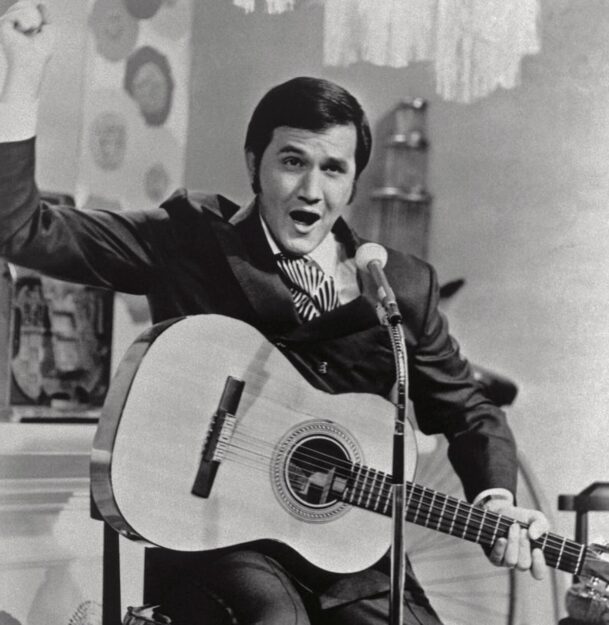
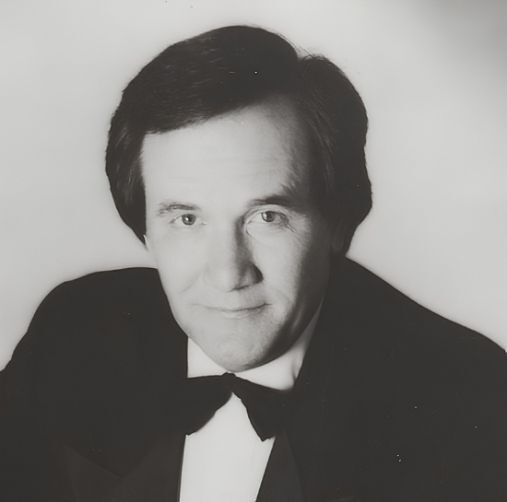
One of the most successful country and crossover pop artists and songwriters of the 1960s, Miller was known for his signature wit, inventive wordplay, and honky-tonk-influenced novelty songs. His songwriting ranged from offbeat humor to heartrending ballads and theatrical storytelling for Broadway and film, establishing him as one of country music’s most multifaceted talents, with a musical legacy of extraordinary depth and range.
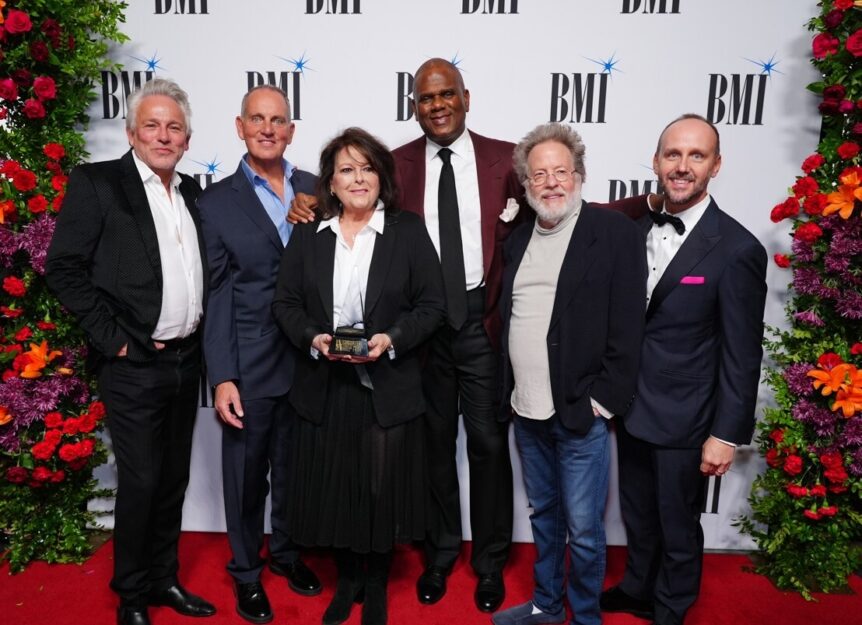
SHOF Board Members Fletcher Foster, Chairman of SHOF’s Nashville Committee, Mike O’Neill, and Jon Platt, made the induction to Roger Miller’s widow, Mary Miller, before the BMI Country Awards.
"We were ecstatic to learn that Roger was being inducted into the Songwriters Hall of Fame. Of all his many talents, he was most proud of his songwriting. This lifetime achievement would have meant a great deal to him, and we are honored to celebrate the recognition of his extraordinary body of work," said Mary Miller.
Roger Dean Miller was born in Fort Worth, Texas, and raised in Erick, Oklahoma, by his aunt and uncle after the death of his father. He developed an affinity for music by listening to the Grand Ole Opry, and at a young age was encouraged to pursue songwriting and performing by singer-songwriter Sheb Wooley, who was married to his cousin. After serving in the Army, Miller moved to Nashville in 1957 and took a job at the Andrew Jackson Hotel to be in proximity to the country music scene, becoming known as the “Singing Bellhop.”
His early breaks included landing a gig playing fiddle in Minnie Pearl’s road band and meeting George Jones. With Jones, he co-wrote “Tall, Tall Trees,” which Jones recorded, and “Happy Child,” which was recorded by Jimmy Dean. Ray Price’s cover of Miller’s “Invitation to the Blues” spent 19 weeks on the charts and peaked at No. 3 in July 1958.
Miller signed with Tree Publishing, where publisher and songplugger Buddy Killen helped bring his songs to major artists, yielding a number of country chart hits, including Jim Reeves’ “Billy Bayou” (No. 1) and “Home” (No. 2), Ernest Tubb’s “Half a Mind” (No. 8), and Faron Young’s “That’s the Way I Feel” (No. 9), among others. In 1961, Miller’s recording of “When Two Worlds Collide,” co-written with Bill Anderson, became his first solo Top Ten country hit.
His major breakthrough came in 1964 with “Dang Me,” from his album Roger and Out, released on Smash Records. It became his first No. 1 country hit as an artist and his first Top Ten pop hit. It spent 25 weeks on the country chart, including six weeks at No. 1, and reached No. 7 on the Billboard Hot 100. Of Miller’s five Top Ten hits on the Hot 100, his highest-charting single was “King of the Road,” which reached No. 4 in 1965. The song spent five weeks at No. 1 on the U.S. country chart and topped the U.K. singles chart. Dean Martin also recorded it that year.
In just two years, Miller won 11 GRAMMY Awards. In 1965, he won five Country & Western GRAMMYs, including Best Country & Western Song for “Dang Me.” The following year, he set a then-record by winning six in one night, including the GRAMMY for Best Country & Western Song for “King of the Road.”
Beyond his recording career, he became a popular TV personality, frequently appearing on variety and talk shows and starring in his own NBC series, The Roger Miller Show, in 1966. He later wrote and performed songs for Disney’s 1973 animated film Robin Hood and voiced Allan-a-Dale, the film’s rooster narrator. That same year, he was inducted into the Nashville Songwriters Hall of Fame.
In 1985, he was the toast of Broadway with Big River. Miller wrote the music and lyrics for the musical adaptation of Mark Twain’s The Adventures of Huckleberry Finn. Big River won seven Tonys, including Best Musical, and Miller received both a Tony Award for Best Original Score and the Drama Desk Award for Outstanding Lyrics.
Subsequent generations of artists have continued to record Miller’s works and achieve chart success. Ricky Van Shelton reached No. 1 on the country chart with “Don’t We All Have the Right” in 1988, and Dwight Yoakam reached No. 7 with “It Only Hurts When I Cry,” co-written with Miller, in 1992. Alan Jackson took “Tall, Tall Trees,” co-written with George Jones, to No. 1 in 1995, the year Miller was posthumously inducted into the Country Music Hall of Fame. Randy Travis’ recording of “King of the Road” charted in 1997 and was followed by Brooks & Dunn’s No. 1 hit with “Husbands and Wives” in 1998. Other notable artists who have covered Miller’s songs include Reba McEntire, Emmylou Harris, Willie Nelson, R.E.M., Brad Paisley, Kacey Musgraves, Eric Church, Kris Kristofferson, Lyle Lovett, Alison Krauss, Colter Wall, and Huey Lewis, to name a few.
While the annual SHOF gala does not usually include posthumous inductions, the organization hosts its special posthumous inductions at unique venues and events.
MEDIA CONTACT
Rebekah Alperin
Songwriters Hall of Fame
PR & Marketing Consultant